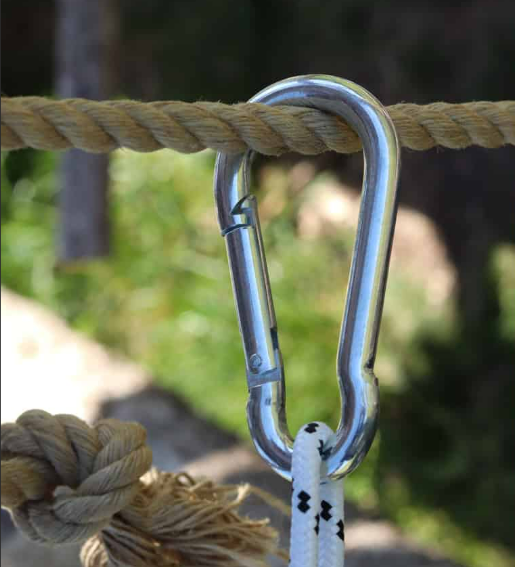
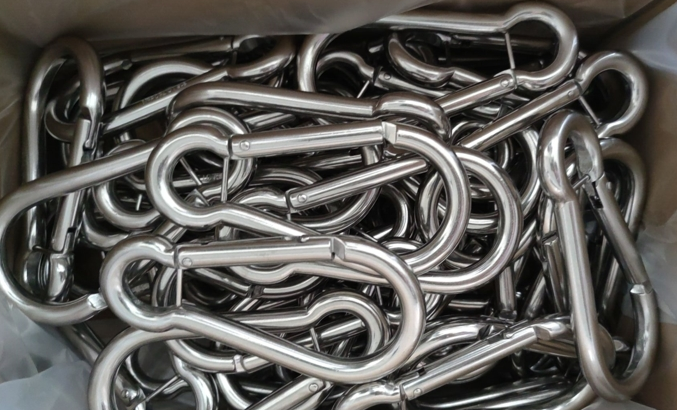
A snap hook is a fastening device with a spring-loaded gate mechanism, allowing for quick and secure attachment to ropes, chains, straps, anchors, and other hardware. It is widely used across various industries, including climbing, construction, rigging, marine operations, outdoor recreation, and safety equipment.
Key Features of Snap Hooks
- Spring-Loaded Gate – Allows for easy one-handed operation while maintaining a secure connection.
- Locking Mechanisms – Some models feature screw gates, auto-locking gates, or double-action locks for added safety.
- Durable Materials – Commonly made from stainless steel, alloy steel, or aluminum for strength and corrosion resistance.
- Load Ratings – Designed to meet specific working load limits (WLL)
Common Types of Snap Hooks
- Non-Locking Snap Hook – Basic design with a simple spring gate (used in light-duty applications).
- Screw Gate Snap Hook – Requires manual twisting to lock (secure but slower to operate).
- Auto-Locking Snap Hook – Self-locking mechanism for fall protection and climbing.
- Swivel Snap Hook – Rotates to reduce twisting in rigging applications.
Applications of Snap Hooks
- Climbing & Fall Protection – Connecting carabiners to harnesses and lanyards.
- Construction & Rigging – Securing loads, hoisting equipment, and scaffolding.
- Marine & Sailing – Attaching sails, ropes, and safety lines.
- Outdoor & Camping – Hanging gear, securing tarps, and organizing equipment.
- Industrial Safety – Used in personal fall arrest systems (PFAS).
Snap hooks are essential for ensuring quick, reliable, and secure connections in both professional and recreational settings. Choosing the right type depends on factors like load capacity, environment, and required safety features.


