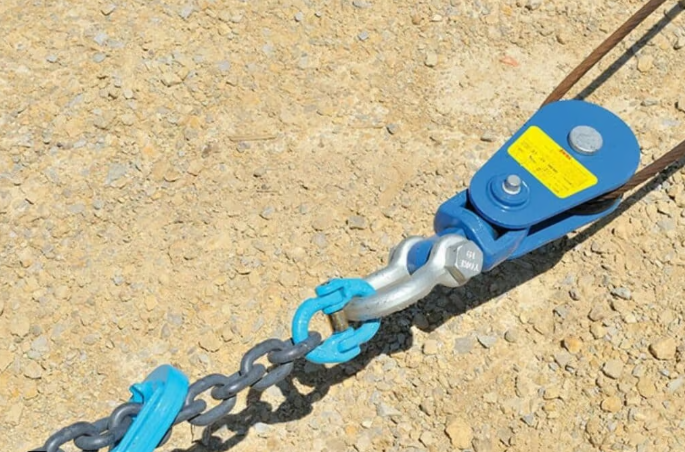
A snatch block is a versatile pulley device used in rigging and lifting operations to change the direction of a rope or cable while reducing friction and increasing mechanical advantage.
Key Features of a Snatch Block:
- Side Opening – Unlike a standard block, a snatch block has a hinged or removable side plate, allowing the rope to be inserted without threading the end through.
- Sheave (Pulley Wheel) – Contains a grooved wheel to guide the rope smoothly.
- Swivel Hook or Shackle – Allows the block to rotate and align with the rope’s pull direction.
- Load Capacity – Rated for specific working loads (always check before use).
Common Uses:
- Redirecting winch cables in off-road recovery.
- Lifting operations in construction or marine settings.
- Increasing pulling power by creating a mechanical advantage (e.g., doubling line pull with a 2:1 system).
Advantages:
- Reduces rope wear by minimizing friction.
- Allows quick rope insertion without threading.
- Increases efficiency in complex rigging setups.
Steps to Use a Snatch Block:
- Choose the Right Snatch Block
- Ensure it matches the rope/cable diameter and load capacity of your application (check the Working Load Limit, or WLL).
- For synthetic ropes, use a block with a smooth sheave to prevent damage.
- Anchor the Snatch Block Securely
- Attach the snatch block to a solid anchor point (tree, vehicle recovery point, or rigging anchor) using a shackle or hook.
- Ensure the anchor can handle the load force (which may be higher due to pulley mechanics).
- Open the Side Plate & Insert the Rope
- Release the hinged side plate or latch mechanism.
- Place the rope into the sheave (pulley wheel) and close the plate securely.
- Never use a damaged or unlatched snatch block—it can fail under load
- Redirect or Increase Pulling Force
- Direction Change: Run the rope from the winch or pulling source through the snatch block and back to the load.
- Mechanical Advantage (2:1 System):
- Attach the snatch block to the load (stuck vehicle, heavy object).
- Run the rope from the winch to the snatch block, then back to a secure anchor point on your pulling vehicle.
- This setup doubles pulling power but halves line speed.
- Apply Tension Slowly
- Avoid sudden jerks to prevent shock loading.
- Use a damper (heavy blanket/towel) on the rope for safety in case of snapback.
- Recovery & Reset
- After completing the pull, release tension before disconnecting.
- Inspect the snatch block, rope, and anchor points for damage.
Safety Tips
✔ Wear gloves & stay clear of the tensioned rope.
✔ Never exceed the snatch block’s WLL.
✔ Avoid sharp bends in synthetic ropes (can weaken fibers).
✔ Keep the sheave aligned with the pull direction to prevent side-loading.


