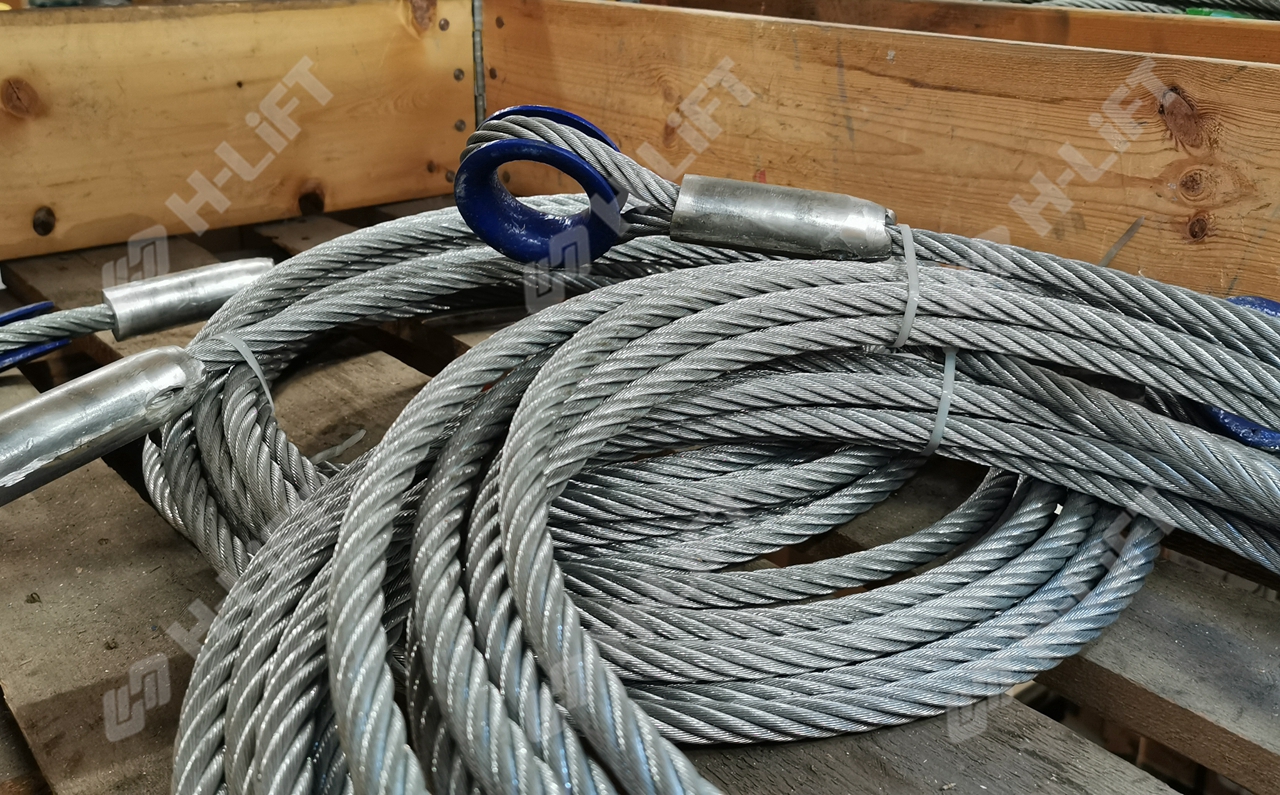
In this guide, we’ll walk you through the steps to correctly assemble a wire rope sling, whether you’re using a mechanical splice, swage fitting, or hand-tucked termination.
What You’ll Need
Before starting, gather the following tools and materials:
- Wire rope (correct diameter and grade for your application)
- End fittings (e.g., sleeves, thimbles, hooks, or shackles)
- Swaging tool or press (for mechanical terminations)
- Wire rope clips (if using a clip-and-thimble method)
- Measuring tape & marker
- Wire cutters or a shear
- Hammer & wrench (for tightening clips)
- Safety gloves & goggles
Step-by-Step Assembly Process
1. Measure and Cut the Wire Rope
- Determine the required length of your sling, accounting for any loops or end fittings.
- Use a sharp wire rope cutter to make a clean, straight cut. Avoid fraying by taping the cut area before cutting.
2. Prepare the Wire Rope Ends
- If using a thimble, insert it into the loop before securing.
- For swaged or pressed fittings, ensure the wire rope is properly seated inside the sleeve.
3. Choose Your Termination Method
Mechanical Splice (Swaging)
- Slide a ferrule (sleeve) onto the wire rope.
- Form a loop and insert the loose end back into the ferrule.
- Use a swaging tool or hydraulic press to compress the sleeve, securing the rope.
- Ensure the swage is smooth and free of cracks.
Wire Rope Clips (Clip-and-Thimble Method)
- Place a thimble inside the loop to protect the rope.
- Apply the first wire rope clip closest to the thimble, saddle on the live side of the rope.
- Tighten the nuts evenly with a wrench.
- Add additional clips (usually 2-3 depending on rope diameter), spaced about 6x the rope diameter apart.
- Apply light tension and re-tighten after initial use.
Hand-Tucked Splice (For Fiber Core Ropes)
- Unravel the strands and tuck them back into the rope in a specific pattern.
- This method requires skill and is typically used for fiber core wire ropes.
Inspect the Assembly
- Check for proper seating of fittings.
- Ensure no kinks, fraying, or crushed sections exist.
- Perform a load test (if required) before putting the sling into service.
Safety Tips for Wire Rope Slings
✔ Never overload – Always follow the Working Load Limit (WLL).
✔ Inspect regularly – Look for broken wires, corrosion, or deformation.
✔ Store properly – Keep slings in a dry, clean area to prevent damage.
✔ Use the right sling – Match the wire rope grade to your lifting needs.
Need High-Quality Wire Rope Slings?
At H-Lift, we supply high-quality wire rope slings and rigging hardware for industrial, construction, and marine applications. Browse our collections or contact our experts for customized lifting solutions!